
Nous sommes fiers de vous présenter le tensiomètre Wheel Fanatyk. Conçu par Jobst Brandt (auteur de « The Bicycle Wheel »), cet outil représente le nec plus ultra des tensiomètres.

FSA en a brièvement produit une version qui a rencontré un succès international éclectique. Sa production a été arrêtée il y a plusieurs années et elle n'est plus disponible à la vente. L'outil Wheel Fanatyk améliore sa conception de plusieurs manières essentielles. Pour en savoir plus sur les fonctionnalités de base de cet outil, dans sa version FSA, cliquez ici .

Pour 2012, nous avons intégré des pièces mobiles de qualité supérieure et un indicateur numérique. Toutes les pièces sont fabriquées aux États-Unis avec des tolérances et des matériaux qui permettent d'atteindre un niveau de précision inédit. Il s'agit peut-être du modèle le plus précis au monde. L'indicateur numérique est doté de nombreuses fonctionnalités :
1. Force du ressort extra faible pour une précision élevée.
2. Résistant aux chocs, à la poussière et à l'eau.
3. Grand écran LCD.
4. Zéro.
5. Conversion pouces/métrique.
6. Bouton Marche/Arrêt.
7. Autonomie de la batterie d'un an (fonctionnement continu).
8. Sortie SPC/RS232 (téléchargements sur un PC).
9. Résolution : 0,0005"/0,01 mm.
La sortie SPC/RS232 se fait via un port mini-USB et nécessite un câble dédié qui coûte 120 $. Instructions ici .

L'instrument est entièrement calibré sur notre banc d'essai interne à l'aide d'un dynamomètre Dillon de précision. Nous proposons une conversion de tension pour tous les diamètres et épaisseurs de rayons courants.

Aucun autre tensiomètre à rayons n'offre une telle combinaison de précision, de facilité d'utilisation, de durabilité et de prix. Regardez cette vidéo qui présente son utilisation et ses fonctionnalités.
L'outil coûte 295 dollars américains, et voici ce qu'il contient :
1. Un étui antichoc, verrouillable, doublé de mousse et doté de charnières à goupille métallique.
2. Manuel du propriétaire de 26 pages, contenant de nombreux conseils de montage de roues.
3. Tableau de tension des rayons plastifié, pour une conversion pratique.
4. Batterie de rechange.
5. Un CD contenant les fichiers PDF du manuel et du tableau, ainsi que notre film d'instructions.
![Que contient la mallette [2012].](https://cdn.shopify.com/s/files/1/0553/5707/9710/files/Tensiometer-contents.jpg)
La garantie est d'un an, mais nous mettons tout en œuvre pour satisfaire pleinement nos utilisateurs. Le recalibrage est gratuit à vie. Satisfaction garantie.
Consultez ces images :
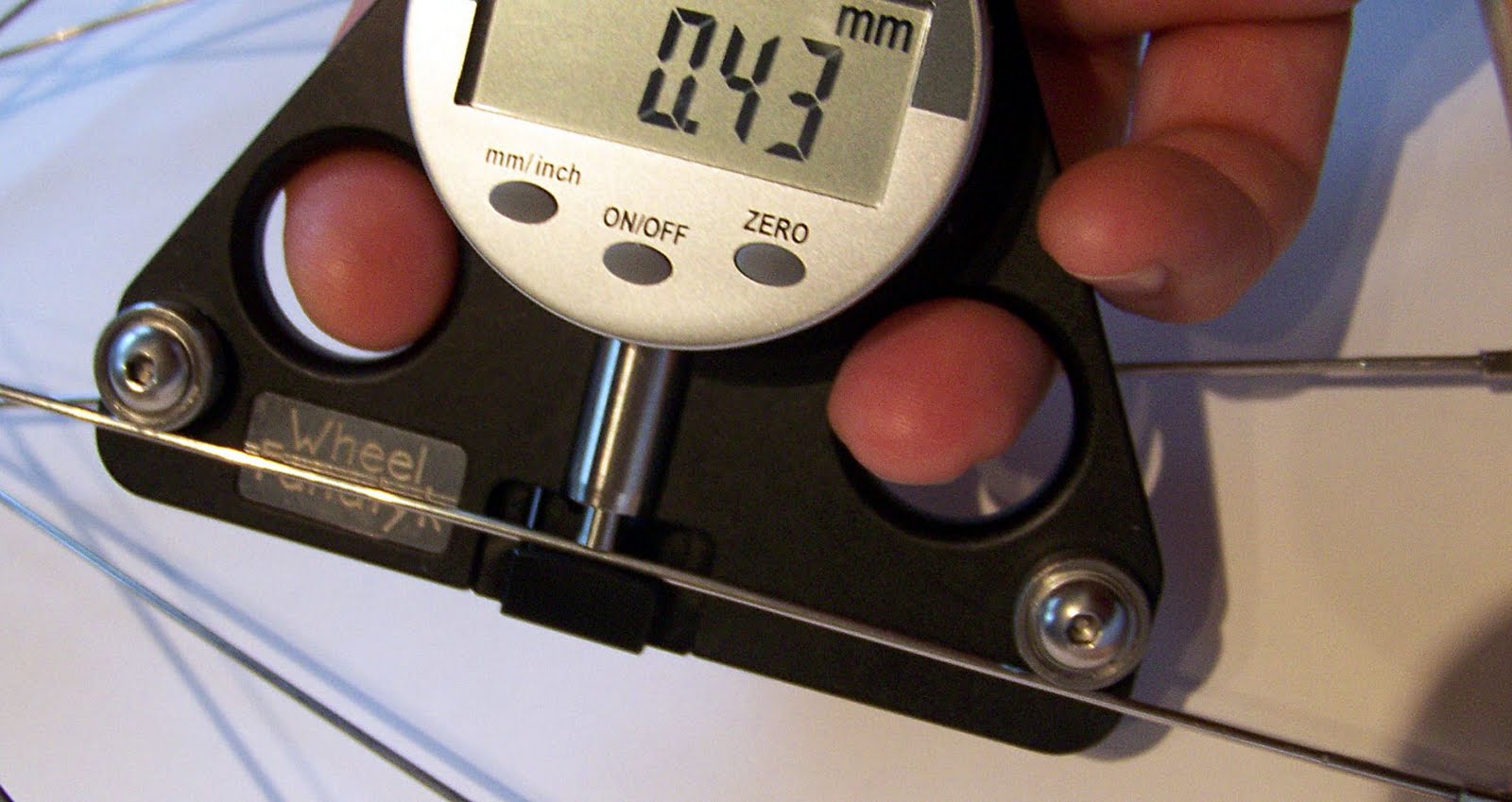

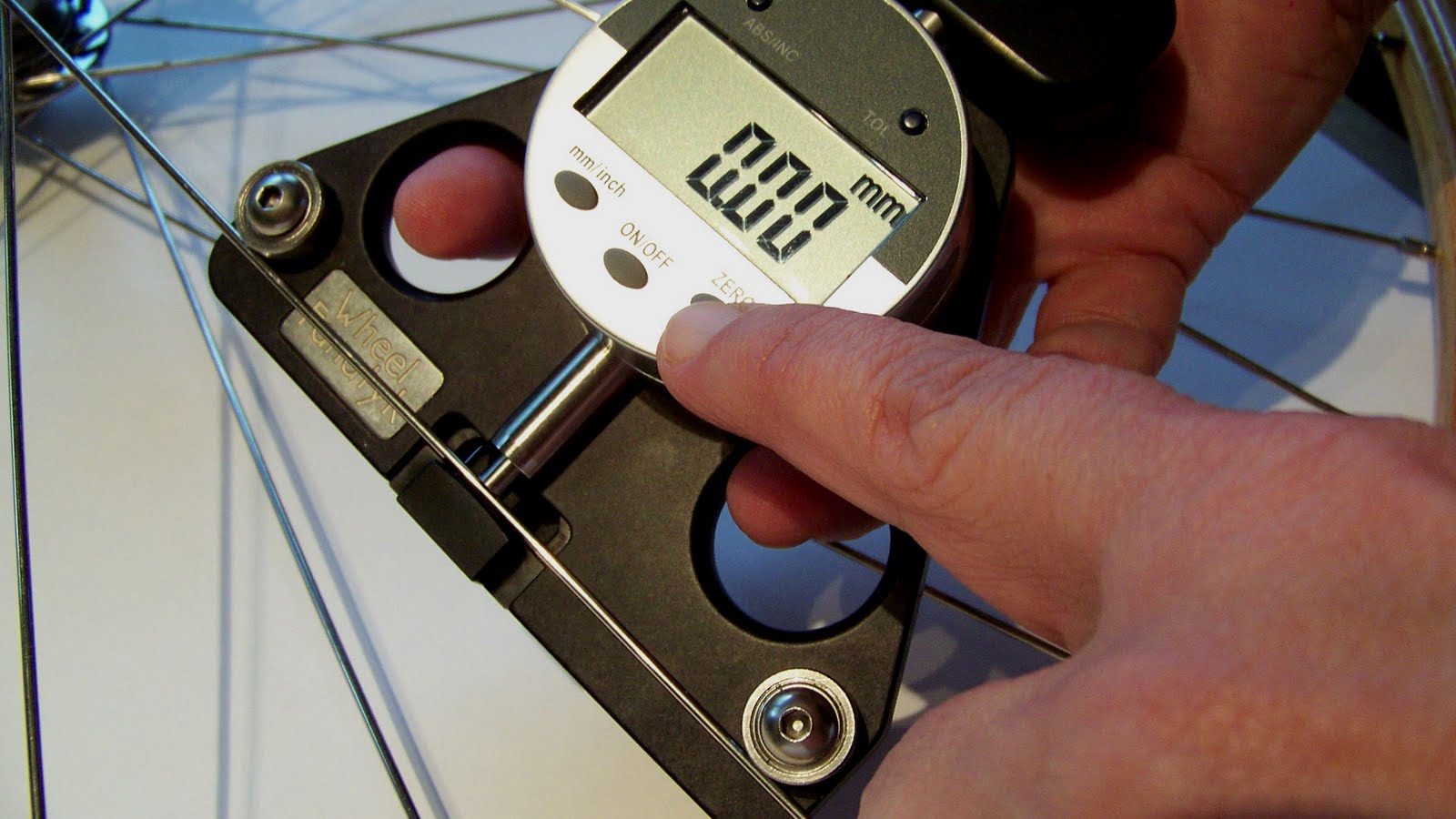
Vous pouvez l'acheter ici .


Les commentaires sont approuvés avant leur publication.
Veuillez remplir le formulaire suivant pour soumettre votre demande de rétractation.

Alex
novembre 02, 2021
Nice tool. However there is something I don’t understand. One of the virtues of this type of tool is said to be (as explained in the FSA tool link) that the readings are independent from spoke thickness and material, which results in a faster wheelbuilding as you don’t have to look for conversion tables as with, for example, the Park Tool one.
But on the other hand, in the YouTube video showing how to use the tool, it is shown a conversion table also. I have had a look a it and certainly there is less variation between thickness and material than other tensiometers, but still some variation, which some how defeats the purpose of super precise reading…. if you want super precise tension you will have to look at the tables anyway.
In my opinion, this tool would be amazing if you can just enter the data of material, shape and thickness of spoke and then it reads the tension straight away. Being a digital reading, must not be super difficult for the right person. That would be the way of getting rid of conversion tables, which is kind of charming in a 80s way of looking at things, but maybe a bit out of date for the 21 century.